
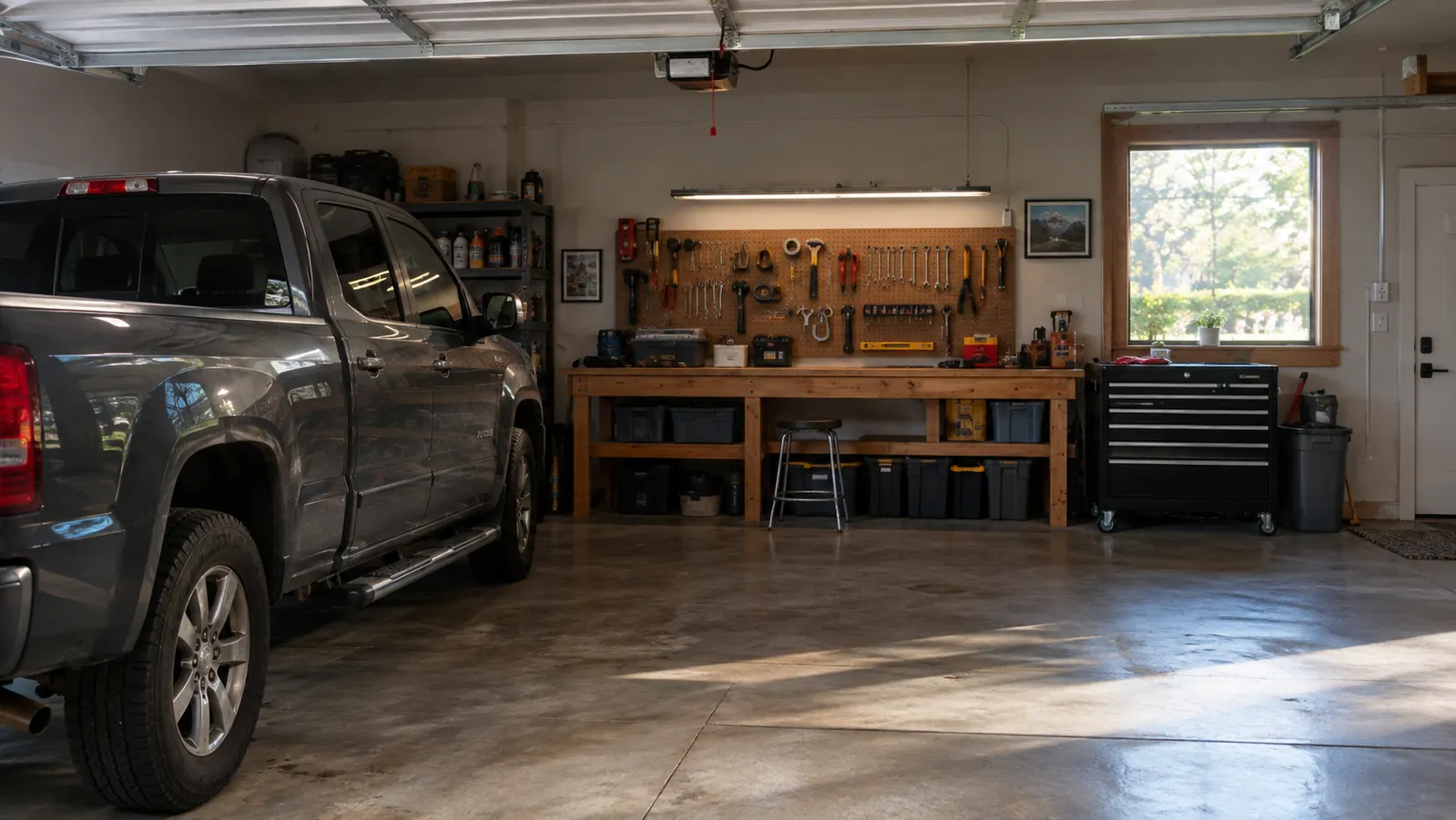
If you do your own work on a pickup, you know the Saturday that starts with a stuck lug nut. You dig out the breaker bar, put your weight on it, and wonder why a tool you bought for one job now lives under the back seat. I bought the DEWALT 20V MAX DCF900P1 for the same reason most home mechanics do: I got tired of fighting. After 30 years turning wrenches on heavy equipment, and now a year of using this thing on my own 2014 F-150 in a detached garage outside Scranton, I can tell you exactly what it is and what it is not.
The Quick Verdict
The DEWALT DCF900P1 is the one impact wrench I reach for first in my home garage. It is heavy, it eats batteries if you lean on it, and the detent pin will slow you down if you are careless. But it has not met a lug nut, caliper bracket bolt, or suspension fastener on my F-150 that it could not break loose, and that is the whole job.
Amazon Check Today's Price →Stop fighting rusted fasteners on your own truck
If you are tired of breaker bars and cheater pipes on Saturday mornings, the DEWALT DCF900P1 puts the torque where you need it. Check today's price on Amazon.
Amazon Check Today's Price on Amazon →How I've Used It
I have had the DCF900P1 for about a year. It lives in the rolling chest in the project bay of my garage, and it comes out for every job that involves a fastener bigger than a 10mm. The truck is a 2014 Ford F-150, and I do the oil changes, brakes, tire rotations, and suspension work myself. That means lug nuts on and off a few times a year, caliper bracket bolts that have seen Pennsylvania road salt, and the occasional lower control arm bolt that makes you question your life choices.
The tool is a half-inch drive with a detent pin anvil. It came as a kit with one 5 Ah battery and a charger. I already owned a couple of DEWALT 20V batteries, so I did not worry about runtime much. In practice, a full battery handles a full brake job on the truck with power to spare. Tire rotations are barely a tick on the charge meter.
I used it in three modes: the snug setting for putting things back together, the medium setting for general work, and the full setting for breaking loose. On the full setting, this wrench has not failed me once. I have not needed a breaker bar since the week I bought it, and that includes the day I pulled the front calipers off after a winter of road salt.
The first real test came on a Saturday in late March, the day I decided to do the front brakes. The truck had sat through a full Pennsylvania winter, and the caliper bracket bolts had not been touched in about three years. I hit each one with a shot of penetrating oil the night before, let it soak, and then went at them with the DEWALT on the full setting. All four bolts came out like they were put in yesterday. The old corded impact I used to own would have buzzed on those bolts for a while before they gave up. This one did not even slow down.

Power You Can Feel in Your Wrist
The headline number for the DEWALT DCF900 is 700 foot-pounds of max fastening torque and 1,200 foot-pounds of breakaway torque. Numbers on a page do not mean much until you have a seized bolt at the end of a 12-inch arm. What I can tell you is that this wrench has never stalled on anything I have pointed it at on a half-ton pickup. That includes lug nuts torqued to spec by a shop, rusted caliper bracket bolts, and a pitman arm nut that had been there since the truck was new.
The torque comes on fast. There is a noticeable kick when the hammer engages, and you learn to hold on with both hands for the first couple of hits. The variable speed trigger helps here. If you ease into it, the wrench starts slow and then delivers the full hit when you need it. If you just mash the trigger, it will snap a socket adapter before you know what happened. I broke one cheap adapter that way and learned to respect the trigger.
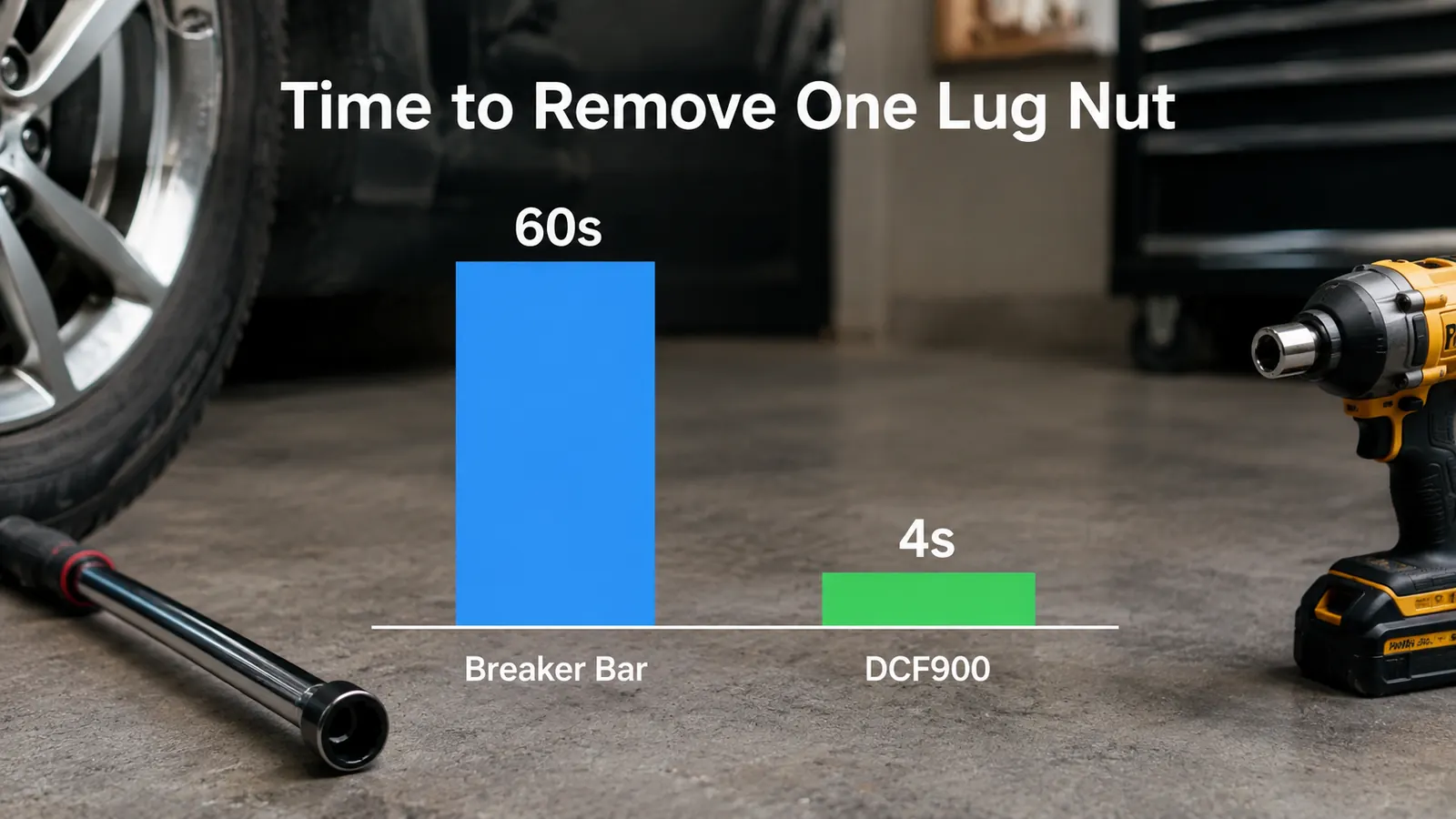
One afternoon in June I had to pull the pitman arm nut off the steering box to replace the tie rod ends. That nut had been on there since the truck rolled off the line in 2014, and I had already rounded the corners of a 30mm socket trying to get it with a breaker bar. I put a fresh socket on the DEWALT, set it to full, and let it hammer. It took maybe four seconds of hammering before the nut spun free. That is the moment I stopped doubting the torque rating and started believing it.
I have not needed a breaker bar since the week I bought it, and that includes the day I pulled the front calipers off after a winter of road salt.
What It's Like to Live With in a Home Garage
The DCF900P1 is not a small tool. It is about 9 inches long without a socket, and with a 5 Ah battery on the bottom it weighs in the neighborhood of 7 and a half pounds. For comparison, my old corded impact is heavier, but not by much. You feel the weight when you are holding it out at arm's length over a wheel well. For lug nuts and brake work, that is fine. For overhead work or anything where you are reaching, you will want to use two hands or take a break.
The detent pin anvil holds sockets firmly. Some people prefer a hog ring because it is faster to swap sockets, but the detent pin means the socket is not going to fly off when you are working in a tight spot. My only complaint is that the pin can be stiff when new. It loosens up after a few weeks of use. If you wear gloves, you will figure out the trick of pushing the pin with your thumb while sliding the socket on.
The three-speed selector is on the back of the tool, and the LED work light is at the base. The light is bright enough to see what you are doing under the truck, though I still keep a work light on a stand for anything serious. The belt hook is useful when you are moving around the garage, but with a big battery the tool is heavy enough that I mostly set it on the bench between fasteners.
The garage is unheated in the winter apart from a portable heater, so I have used this wrench in the cold more than I would like. On a 20 degree morning in January, the batteries do not perform like they do in June. The DEWALT still broke everything loose, but I noticed the hammer hits felt a little softer until the battery warmed up. I keep a spare battery in my coat pocket on cold days, and that solves most of it. It is worth knowing if you work in an unheated garage like mine.
Battery Life and the Tools You Already Own
If you are already in the DEWALT 20V system, the DCF900P1 is an easy add because it uses the same batteries as your drill, your circular saw, and your work light. If you are not in the system, the kit with one 5 Ah battery is a fine place to start. I would buy a second battery fairly quickly, because this tool can drain a battery fast when you are doing heavy work. On the full setting, continuous hammering will pull the charge down noticeably faster than a drill ever would.
For a home garage routine, though, the runtime is a non-issue. A full brake job on the F-150 uses maybe a third of a 5 Ah battery. Tire rotations are nothing. I have done a full weekend of suspension work, upper and lower control arms, sway bar links, and tie rods, on a single charge with some left over. The brushless motor is efficient when you are not asking for max torque on every fastener.
The one time I actually ran the battery flat was the weekend I did the upper and lower control arms on the driver's side. That job involves a lot of hammering on rusted bolts, and I was not being careful about the trigger. I swapped in the spare battery and finished the job without stopping. If you do a lot of suspension work, I would keep a second battery charged and within reach. It is not a flaw in the tool, it is just the nature of a high-torque impact.
The Tradeoffs Nobody Mentions
The first tradeoff is weight and bulk. This is a professional-grade tool, and it feels like one. If you only do oil changes and the occasional tire rotation, a smaller and lighter impact would be easier to live with. The DEWALT DCF900 is overbuilt for that work, and you will know it every time you pick it up.
The second tradeoff is the detent pin. It holds sockets securely, but it makes swapping sockets slower than a hog ring anvil. If you do a lot of work where you are changing sockets constantly, you may find yourself wishing for the hog ring. I got used to it, and I actually prefer the security when I am working under the truck, but it is worth knowing before you buy.
The third tradeoff is that this tool is loud. It is a hammer mechanism, so it is not a quiet experience. I wear ear protection when I am using it in the garage, and I recommend you do the same. The neighbors will know you are working, but that is part of the deal with any serious impact wrench.
There is also the matter of the anvil. The detent pin version is the one I have, and it is the one most home mechanics will end up with. If you are the kind of person who likes to swap sockets one-handed, you will adapt. If you are the kind of person who drops sockets in the dark under a truck, you will be glad the pin is there. I have dropped exactly zero sockets since I started using this wrench, and I used to drop them all the time with a hog ring.
What I Liked
- Breaks loose rusted suspension and brake fasteners that a breaker bar would fight
- Three speed settings give you control for both breaking loose and snugging down
- Uses the same 20V batteries as the rest of the DEWALT line
- LED light actually helps under the truck
- Detent pin anvil holds sockets securely in tight spaces
Where It Falls Short
- Heavy and bulky for lighter jobs
- Loud enough that ear protection is a must
- Detent pin is stiff when new and slows socket changes
- Drains a battery fast if you lean on max torque
Who This Is For
This is for the home mechanic who has a truck, an SUV, or a car with real miles on it, and who is tired of fighting rusted fasteners. If you do your own brakes, your own tire rotations, your own suspension work, and you have ever stood on a breaker bar and wondered if there is a better way, this is the better way. It is also for anyone who is already in the DEWALT 20V battery system and wants a serious impact without starting a new battery platform. If you work on heavy equipment or do this for a living, you already know whether you need this tool. For the rest of us, it is the difference between a Saturday job that gets done and a Saturday job that owns you.
Who Should Skip It
If your tool use is limited to hanging shelves and putting together flat-pack furniture, this is not the wrench for you. If you only change oil and rotate tires once a year, a smaller, lighter impact or even a good breaker bar will do the job without taking up half a drawer. And if you are not in the DEWALT battery system and do not plan to be, there are other good impact wrenches out there. The DCF900P1 earns its keep when you are doing real work on real fasteners, not when you are looking for a gadget to fill out a tool chest.
The wrench I reach for first in my garage
After a year of brake jobs, tire rotations, and suspension work on my F-150, the DEWALT DCF900P1 is the tool that makes Saturday jobs actually end. See today's price on Amazon.
Amazon Check Today's Price on Amazon →