
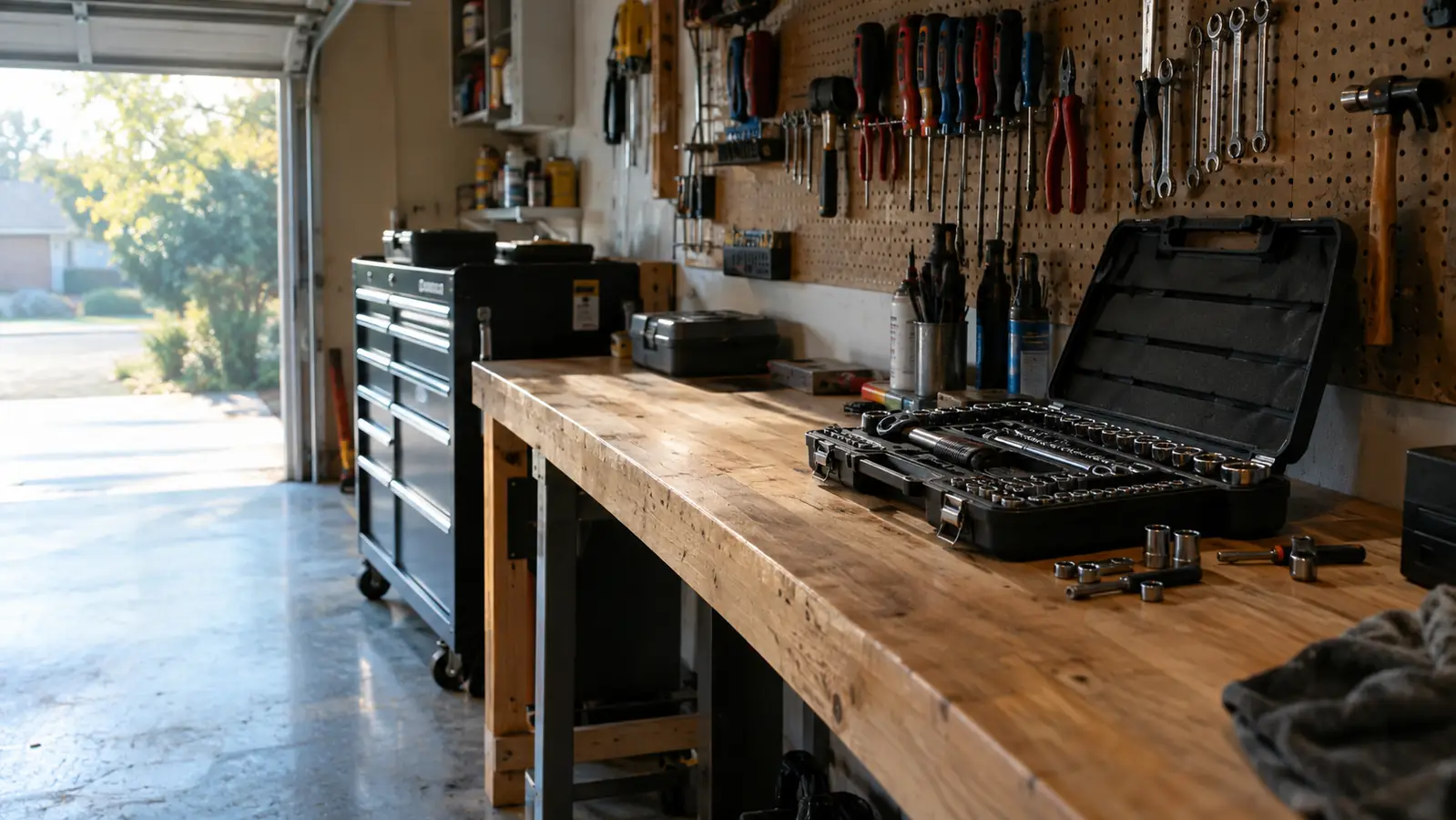
Any socket set will turn a bolt. The question is which one you reach for when the stubborn ones show up, the rusted ones, the ones in a corner where the ratchet only gets half a swing. I spent a month working out of a CRAFTSMAN 159-piece mechanics set and a GEARWRENCH mechanics set side by side, doing the front brakes on my 2014 F-150, fixing a loose latch on the shed, and sorting out a hitch, and the honest answer is that these two are built for different garages. If you want one set that covers the truck and the house, buy the CRAFTSMAN. If you need every odd size and you turn wrenches daily, the GEARWRENCH pulls ahead.
Those are the two names a guy in a home garage actually sees. CRAFTSMAN has hung on pegboards for decades, and GEARWRENCH is the brand that showed up at job sites about fifteen years back and stayed. Both carry a lifetime warranty on paper. The real difference shows up the tenth time you use the set, not the first, so I did not compare them on a bench. I drove them the way you will, dropped sockets on a concrete floor, and worked in the cold with stiff fingers. Here is how they stack up on the things that actually cost you time.
| CRAFTSMAN 159-Piece | GEARWRENCH 218-Piece | |
|---|---|---|
| Price | Tends to run lower per piece and shows up on sale more often | Costs more up front, mostly because you pay for the extra sizes and the machining |
| Coverage | 159 pieces cover the common sizes across 1/4, 3/8 and 1/2 drive | Around 60 more pieces fill in the less common sizes that show up on late-model vehicles |
| Ratchets | 90-tooth heads turn a bolt in a 4 degree arc, a real edge in tight spaces | Fewer teeth means a wider swing, fine out in the open, frustrating up under the dash |
| 12-Point Sockets | Includes both 6-point and 12-point in the sizes that matter most | Ships nearly every socket as 12-point, a genuine help on rounded or rusty heads |
| Build Quality | Solid and honest, with the odd stamped edge you notice if you look closely | Cleaner machining out of the box, especially on the ratchet heads |
| Warranty | Lifetime coverage and you can swap a broken piece in person at a local store | Lifetime coverage too, but it means boxing the part up and shipping it out |
| Storage | Blow-molded case with a labeled home for every socket, easy to see what is missing | Trays hold the set fine, but the bigger count makes the case fussier to close |
| Best For | Weekend jobs on the truck, the house and the trailer | Daily turning where the odd size and thin walls matter |
Before the sections below, one note on method. A socket set earns its spot on three things: how the ratchet feels in a tight spot, how the sockets grip a fastener, and how the set behaves when it lives in a work truck. I weighed those heavier than the sticker count. I also kept both cases riding in the bed of the truck behind the tool box for half the month, because a case that only sits on a bench never tells you how it handles a gravel driveway or a cold night. The table is laid out so you can see where each set gives ground, because a set that never admits a weakness is usually hiding one.
Where CRAFTSMAN Wins
The CRAFTSMAN wins where the weekend is short and the truck is waiting outside. The 90-tooth ratchets are not a gimmick. When I did the front brakes on my F-150 in mid-October, the caliper bracket bolts sit up against the knuckle, and you get maybe an eighth of a turn before the handle hits metal. On that truck the bracket bolts call for 129 ft-lb, and the shop before me had them on with an impact gun, so they were not giving ground. With a 90-tooth head, that 4 degree arc keeps you moving, turn after turn, without pulling the ratchet off to reseat it every second. I tried a 72-tooth ratchet out of my old drawer on the first bolt and gave up by the third, the swing was so tight I was working the handle with both hands for a quarter inch of rotation. A head with fewer teeth will do the same job, but you fight it the entire way, and fighting a bolt in the cold turns a two hour job into a four hour job. The CRAFTSMAN had both calipers off and the passenger side back together before lunch.
The storage is the quiet win. The blow-molded case gives every socket and every driver a labeled slot, so after a job I glance at the open case and see exactly what is missing before the 12 millimeter socket rolls under the workbench. That sounds small until you spend twenty minutes hunting for one socket in a two car garage. The trays keep the 1/4, 3/8 and 1/2 drive sets separate, and the latches close tight, so nothing shifts when the case rides in the bed of the truck behind the tool box.
Then there is the warranty, the kind you can actually use. Break a CRAFTSMAN socket and you walk into a local store, hand over the piece, and walk out with a replacement the same day. No packing, no shipping label, no week waiting by the mailbox. For a home mechanic who only gets Saturday to fix things, that convenience is worth more than the extra sockets in the other box.
Where GEARWRENCH Wins
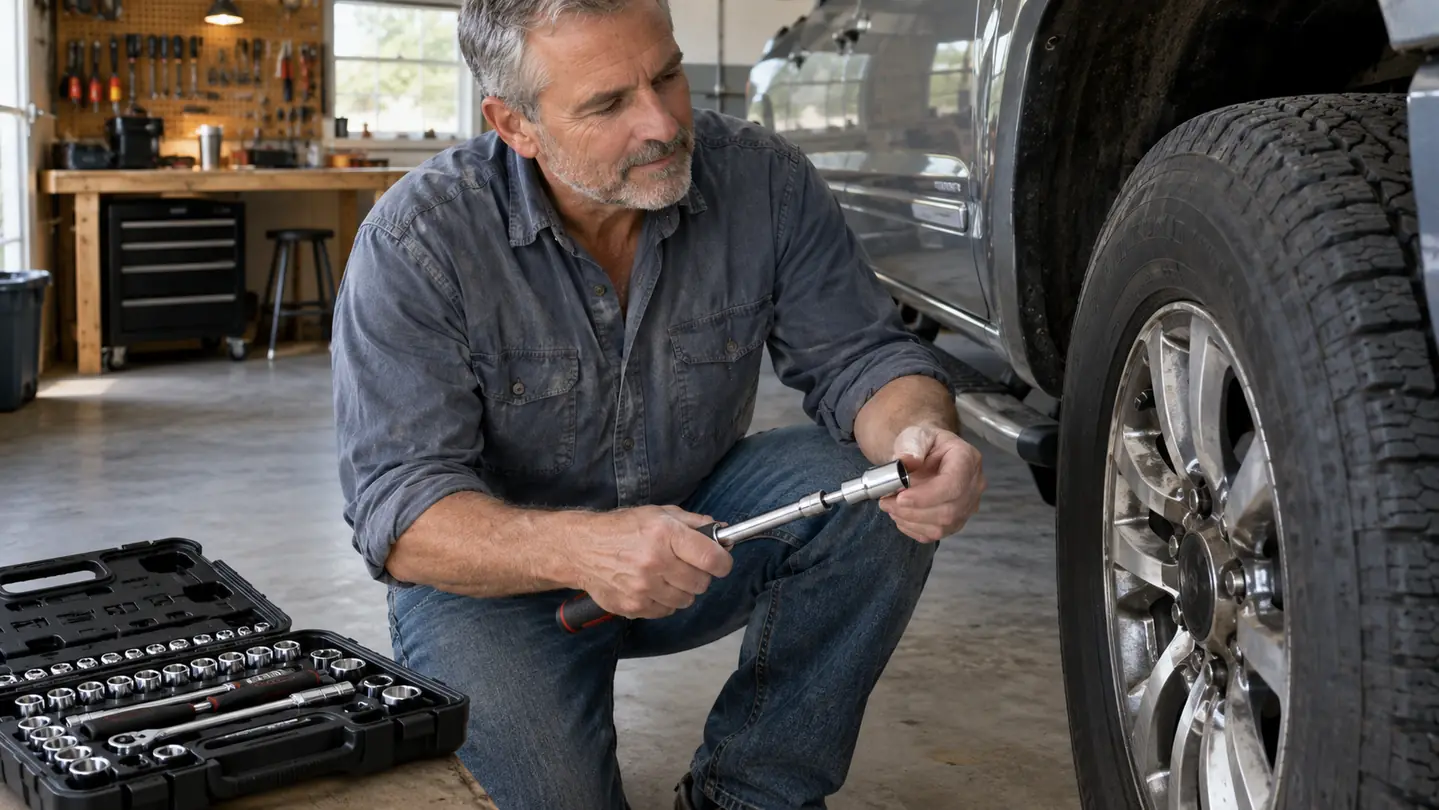
The GEARWRENCH wins the arguments that matter if you turn wrenches for a paycheck. The extra pieces are not padding. There are sizes in that set I did not think I needed until my neighbor asked for a hand with a rattling heat shield on his 2021 Outback. The shield hung off a 15 millimeter flange bolt up above the exhaust, and I could not find a deep 15 millimeter in the CRAFTSMAN's 3/8 tray, so I worked the bolt with an extension and a wobble joint and got it off slow. When I opened the GEARWRENCH case later, there sat a deep 15 millimeter in a labeled slot, ready for exactly that kind of corner. Late-model vehicles lean on the less common sizes more than they used to, and a set that stops at the usual ones will leave you stuck.
The machining is the other place GEARWRENCH pulls ahead. The ratchets have less play in the head, and the sockets come off the rack cleaner, less stamped, and tighter against the fastener. On a rusted suspension bolt, a socket that grabs a little more of the head instead of letting the corners round off is the difference between a ten minute job and an afternoon with a torch. I felt it on a lower control arm bolt on my truck, one that had rusted in place through years of Pennsylvania winters. The GEARWRENCH socket seated on the head without rocking, where the same size out of the CRAFTSMAN case would wobble a hair on the corner, just enough to make me worry about rounding it off. That bolt came out with a breaker bar and no heat, and I credit the fit. If you spend your days on the ground under a vehicle, that tighter fit adds up faster than the price difference does.
The 12-point coverage deserves its own sentence. GEARWRENCH ships most of its sockets as 12-point, which helps on rounded or rusty heads that six-point sockets sometimes slip off. You give up a little grip on clean bolts, but in a rust belt garage, getting a purchase on a mangled head is a genuine edge. CRAFTSMAN offers 12-point in the key sizes, just not across the whole set the way this one does.
The CRAFTSMAN 159-Piece is the set I kept on my bench.
After a month of real use, the CRAFTSMAN went into the drawer beside my workbench and the GEARWRENCH went back in its box. For a home garage and a truck that gets worked on in the driveway, the 90-tooth ratchets, the tidy case and the walk-in warranty beat the extra piece count. See today's price on Amazon and decide with real numbers in front of you.
Amazon Check Today's Price on Amazon →Who Should Buy Which
Buy the CRAFTSMAN if you work out of a home garage, you do your own brakes and oil changes, and you want one set that covers your truck, your house and your trailer without a second thought. Buy the GEARWRENCH if you turn wrenches for a living, or if you own a newer vehicle with the less common fastener sizes and you know you will reach for them. The tiebreaker is your budget and your work week. The CRAFTSMAN will not leave you stranded, the warranty has your back at the store down the road, and it leaves money in your pocket for the next project. The GEARWRENCH is the wider net, and the one I would hand to a working mechanic without hesitation.
What I'd Tell a Neighbor
This may read like I am dodging the question, but the truth is that the right answer depends on your garage. My rule after thirty years is simple: buy the set you will actually grab when a bolt fights back. A set with two hundred pieces that stays in the case because the ratchet feels sloppy is just taking up space. A set with fewer pieces that you reach for without thinking, because the head turns in a tight spot and you know the store down the street will back it up, that is the set that earns bench space. The shed latch proved it for me. The hasp screws were rusted into the wood, and the heads stripped on the second turn, so I went to the bench for the CRAFTSMAN 12-point and a pair of locking pliers. Ten minutes later the old hasp was off and the new one was on, and I never once wished the case held two hundred pieces. The set that gets used is the set that wins.
Try this before you buy anything. Go to the store and open both cases in person. Pull out a ratchet and feel how the head turns. Close the latches and see whether the sockets stay put. That five minutes on the aisle will tell you more than any spec sheet. The CRAFTSMAN won my bench because it felt right in the hand and because the warranty is one I can use without a shipping box. If you are a pro, the GEARWRENCH is the better daily tool, and I would hand it to one without hesitation.
What You Get Beyond the Sockets
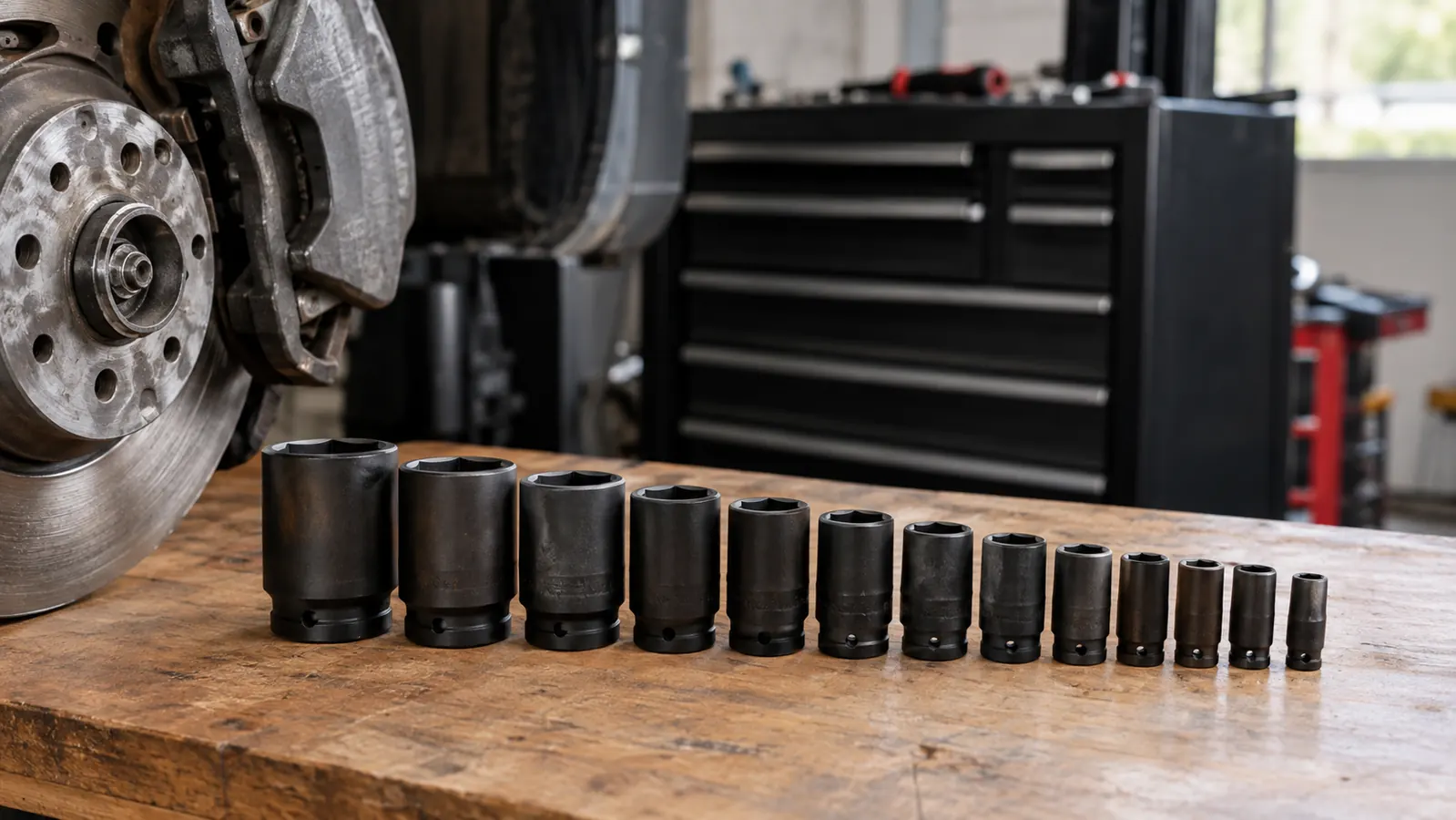
One thing both sets get right is that they do not stop at sockets. Each one includes extensions, a couple of spark plug sockets, hex keys, and the driver bits you need for a clamp screw or a hose clamp. On the CRAFTSMAN, the 1/4 inch drive bits and the adapters ride in their own trays instead of rattling loose, which is the kind of detail you only notice after a few months. I used the hex keys to tighten the set screws on the shed door hinges, and the 1/4 drive bits handled a hose clamp on the truck's radiator hose without me dragging out a separate screwdriver set. The GEARWRENCH covers the same ground, but the organization was looser in mine, with the bits sharing a tray and sliding together whenever the case moved. For home work, how the small stuff gets stored matters as much as the socket count.
The One Thing That Surprised Me
The surprise was how little the extra pieces mattered on a normal Saturday. On the truck, the house and the trailer, I reached for the same dozen sockets every time. The 10, 12, 13, 14, 15 and 18 millimeter sizes did the overwhelming share of the work, and both sets had them in reach. When I swapped the ball mount on the trailer hitch one Sunday, every bolt came off with a 3/4 inch socket from the 1/2 drive tray, and the whole job took twenty minutes including the grease. That is not an argument against the GEARWRENCH. It is an argument for being honest about how you actually work. If the odd size shows up once a month, you do not need it living in your case every day. If it shows up twice a week, you do.
The Bottom Line
The short version: the CRAFTSMAN 159-piece is the better buy for the home garage, and the GEARWRENCH is the better set for the working mechanic. The 90-tooth ratchets, the organized case, the walk-in warranty and the lower price make the CRAFTSMAN the set I kept on my own bench. The GEARWRENCH earns its place with more sizes, tighter machining and 12-point coverage that shines on rusted hardware. Decide based on what you actually turn wrenches on, not on the piece count. Either one beats a drawer full of mismatched sockets, and that is the honest truth.
Make the call this weekend and stop borrowing wrenches.
The CRAFTSMAN 159-piece carries a 4.9 star average from more than 800 home mechanics, covers your truck and your house, and backs it with the convenient kind of lifetime warranty. Check the current price on Amazon and see if it earns the drawer on your bench.
Amazon Check Today's Price on Amazon →