
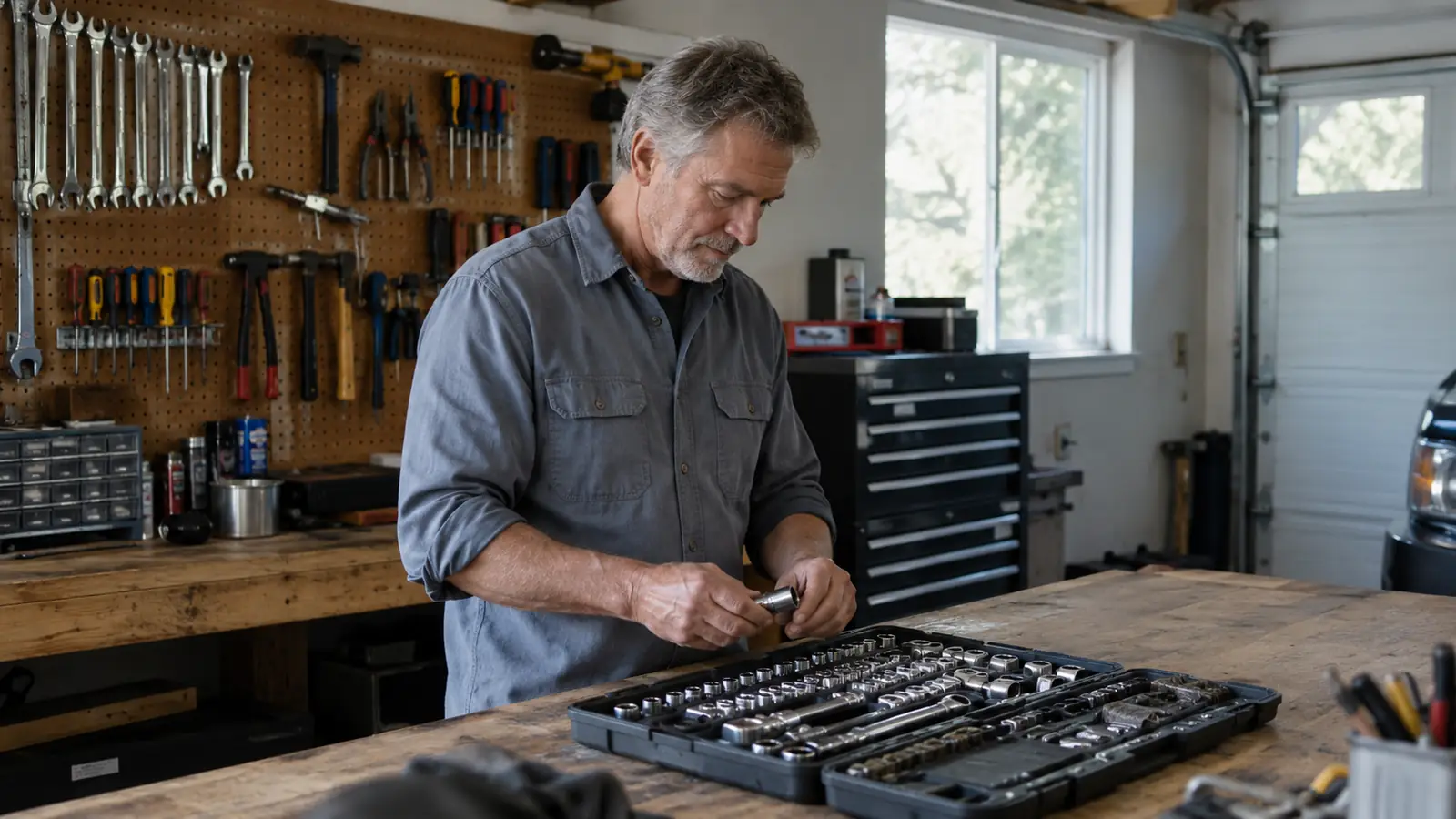
Every couple of months, somebody from the neighborhood knocks on my garage door with a phone in their hand. They've just bought a house, or a used pickup, and they've got a brand-new socket set pulled up on the screen. They ask me, in that careful way, whether it's worth the money or if they should budget more. I used to give a long answer about which brands to avoid and which sizes to buy separately. I don't anymore. I tell them the same thing every time: if you want to start doing your own work, get the Craftsman 159-piece socket set and don't overthink it.
Most people make one of two mistakes when they buy their first set. They either grab a small kit from the checkout lane, a dozen sockets that won't cover half the bolts on a modern truck, or they convince themselves they need the heavy-duty truck brands the online forums push. Both are wrong in the same way. The small kit quits the first time you meet a 21-millimeter bolt. The expensive stuff doesn't make you a better mechanic. It just makes the bill bigger, and you feel it more the day a socket rolls off into the gravel and vanishes.

I'm not a spokesman for the brand, and nobody's paying me to talk it up. I'm a retired heavy-equipment mechanic, which is a polite way of saying I spent thirty years with my hands in things that weigh more than a house. I've owned socket sets from every name you can think of, cheap and expensive. I still pull a pair of old Craftsman deep-wells from the 1980s out of my bench drawer whenever something's really stuck. They've outlived two toolboxes and a whole lot of jobs. I don't recommend a set lightly.
Here's what this one gives you. It covers all three drive sizes you'll ever need: quarter-inch for the small stuff, three-eighths for the everyday work, half-inch for the bolts that don't want to move. That's not a brochure sentence, it's the whole point. One set carries you from changing a headlight bulb to doing the brakes on my 2014 F-150. The sockets come in six-point and twelve-point, so you've got a solid grip on the corners of a bolt plus a fallback for worn fasteners, and the ratchets use a 90-tooth mechanism. Translation: they get into tight spaces and still catch almost instantly when you rock them.
Two summers ago a fellow across the street bought a used pickup with a hundred and fifty thousand miles on it and asked if he could learn to work on it himself. I went over with this Craftsman set under my arm, pointed at the three-eighths ratchet, and said, start here. He did an oil change the next weekend, then brakes, then a starter. When I saw him out there last month he was bleeding his own brakes, with the same set open on the driveway. He's done three jobs now, and he hasn't borrowed a single socket from me.
He's done three jobs now, and he hasn't borrowed a single socket from me.
Start with the set that covers every drive size your garage will meet.
The Craftsman 159-piece includes 1/4-inch, 3/8-inch and 1/2-inch drive sockets in six-point and twelve-point, with 90-tooth ratchets. It's the set I hand to every neighbor who asks where to begin. Check today's price and see if it fits your plan.
Amazon Check Today's Price on Amazon →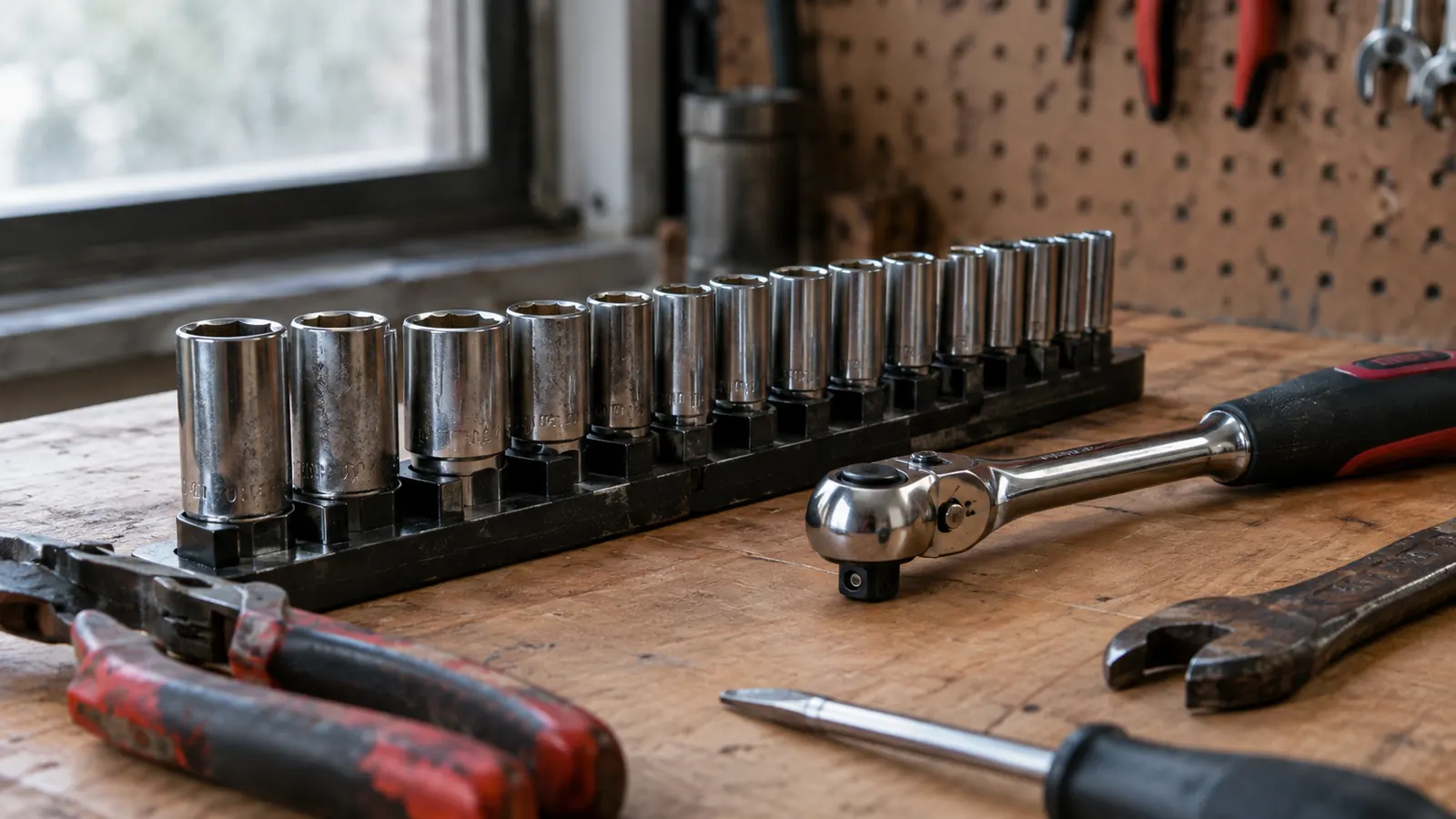
The part nobody mentions in the product photos is how the case works on a real garage bench. The sockets sit in trays by size, and I tell people the same thing I told the fellow across the street: leave them in the trays. A socket you can see at a glance beats a socket you have to dig for. After a few jobs you'll stop reading the size stamped on the side and start grabbing by position, and that's when working on your own truck stops feeling like a chore.
On the ratchets, 90 teeth sounds like marketing math, but it shows up in practice. When you're working over a wheel well with the hood half closed, you don't have room to swing a ratchet in a full circle. The 90-tooth mechanism means you can move the handle a few degrees, get a click, and keep the bolt turning. That's the difference between a tool you enjoy and a tool you curse at. I've thrown plenty of cheap ratchets across the garage in my time. This is the first set I've owned where I stopped replacing them.
Now the honest part, because you should hear it from somebody who isn't selling. This is not the fanciest socket set in the world, and I'd be lying if I said it was. The high-end truck-brand sets have nicer finishing, and if you wrench full-time, someday you might want them. But for a first real set, for a weekend fixer who wants to do his own brakes, oil changes and small jobs without fighting his tools, this is the one. It's the set that gets used, and a set that gets used is worth more than a set that sits in its box.
What I'd Tell You If We Were Sitting at My Kitchen Table
If you were sitting at my kitchen table, cup of coffee in hand, here's what I'd say plain. Don't buy the cheapest set, and don't buy the most expensive set. Buy the set that covers every size you'll meet on a normal vehicle, and that you won't be afraid to use. That's this Craftsman set. You'll add pieces over the years, a deep socket or two, a breaker bar, maybe an impact driver once you get serious. That's normal. The set you start with is the foundation, and a foundation that's solid beats one that's jewelry. Start with this one, use it, and you'll be fine. If you're still reaching for it in ten years, you did it right.
If you're ready to start working on your own truck, this is the set I'd hand you.
The Craftsman 159-piece socket set is the one I recommend to every neighbor who asks where to start. It covers the sizes you'll actually meet, holds up to real use, and stays organized on the bench. Check today's price on Amazon and see if it's the right foundation for your garage.
Amazon Check Today's Price on Amazon →