
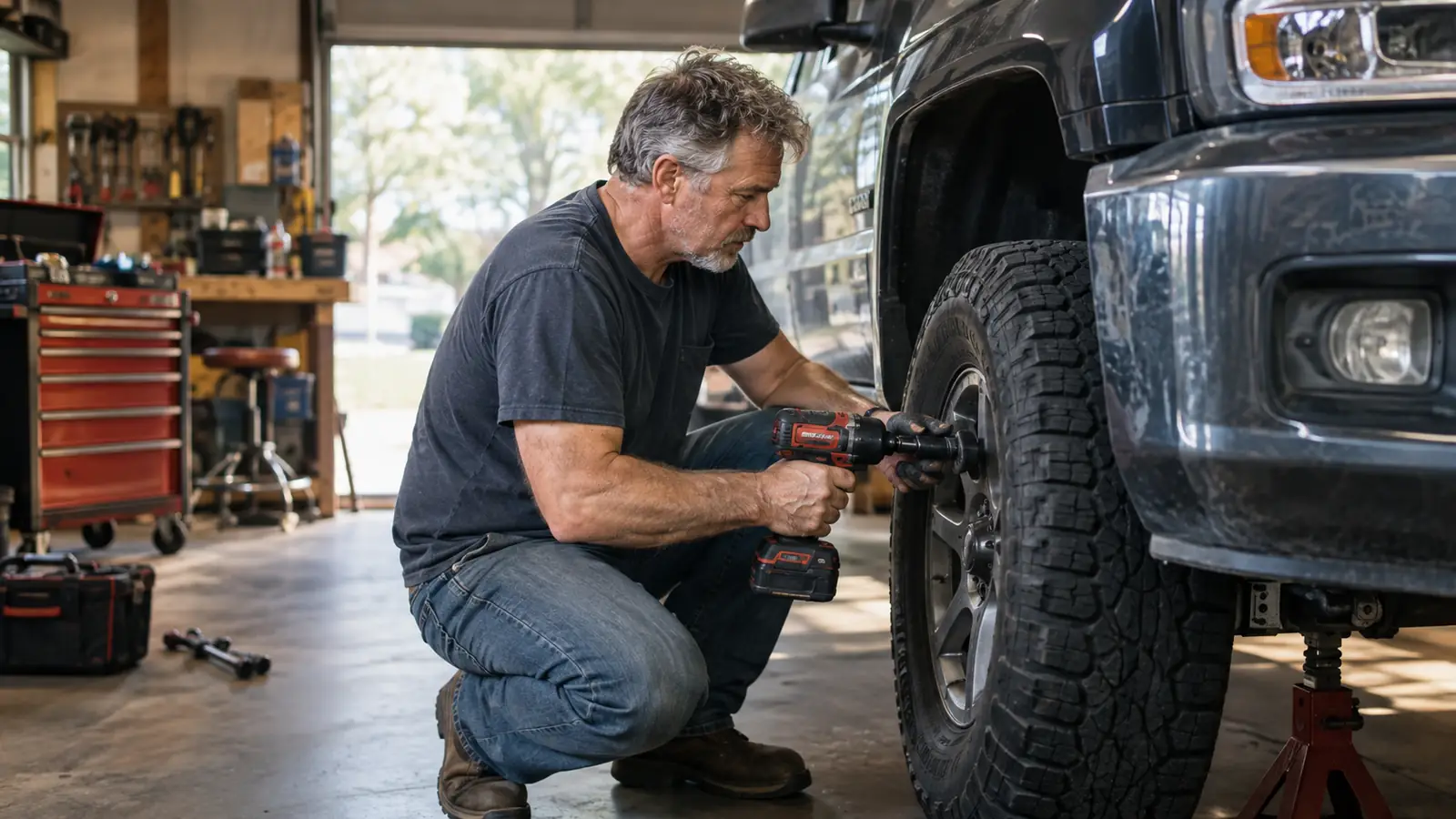
There are two kinds of tool reviews on the internet. The first kind is written by someone who unboxed the thing, zipped off one lug nut, and declared it the best impact wrench ever made. The second kind is written by someone who has actually lived with the tool for a year, through brake jobs and ball joints and one stubborn crank pulley bolt on a truck that had not been apart since the Bush administration. I am here to write the second kind. I am Ray, I turned wrenches professionally for 30 years, and I have spent the last year using the DEWALT DCF900P1 in my own garage on my 2014 F-150 and on whatever else rolls in needing attention.
Before I get into the details, the short version: this is a very strong impact wrench, the kind that makes you wonder why you kept a breaker bar and a length of pipe for so long. It has also got a couple of quirks that the marketing photos do not show you, and one of those quirks is going to matter to you more than the spec sheet suggests. I have got no reason to oversell it and no reason to undersell it. I just want you to know what you are actually buying before you hand over the money.
The Quick Verdict
A serious, powerful impact wrench that earns its place in any home garage. The hog ring anvil is the one thing I would change, and even that is a ten-minute fix. If you work on rusty vehicles, this tool will save you more time than anything else on your bench.
Amazon Check Today's Price →The impact wrench that makes me reach for the breaker bar a lot less often
The DEWALT DCF900P1 has handled every lug nut, suspension bolt, and rusty fastener I have thrown at it in a year of truck work. Check today's price on Amazon and see if it fits your garage.
Amazon Check Today's Price on Amazon →How I Have Used It
My garage is a detached two-car, one bay for projects and one bay for the truck. It is unheated in the winter apart from a portable heater, which means I do a fair amount of work in the cold, and cold matters for batteries and for rust. Over the last 12 months I have used the DEWALT DCF900P1 for four brake jobs, two sets of ball joints, a tie rod end, a wheel bearing, and the kind of miscellaneous weekend work that a 57-year-old finds for himself. That is not a torture test. It is a normal year of home maintenance, and I think a normal year is exactly what most of you are shopping for.
The most honest thing I can tell you is what it did not do. It did not once leave me standing there with a stuck bolt and no plan. On my F-150, the lug nuts come off so fast that I actually slow down on purpose so they do not hit the ground and roll under the workbench. The pinch bolts on the lower control arms, the ones I used to fight with a torch and a breaker bar and a lot of bad language, those came out with a few rattles from the DEWALT. That is the real story of this tool. It turns jobs I used to schedule around into jobs I just do.
I should also tell you what I did not do. I did not test it against a calibrated dyno in a lab. I did not measure torque output with any scientific instrument. I am a mechanic, not an engineer, and if a number on a spec sheet matters to you, DEWALT publishes it and you can read it there. What I can tell you is what the tool does on real rusty fasteners, in a cold garage, on a 12-year-old truck, and that is the information most of you actually need.
The Power, in Plain Terms
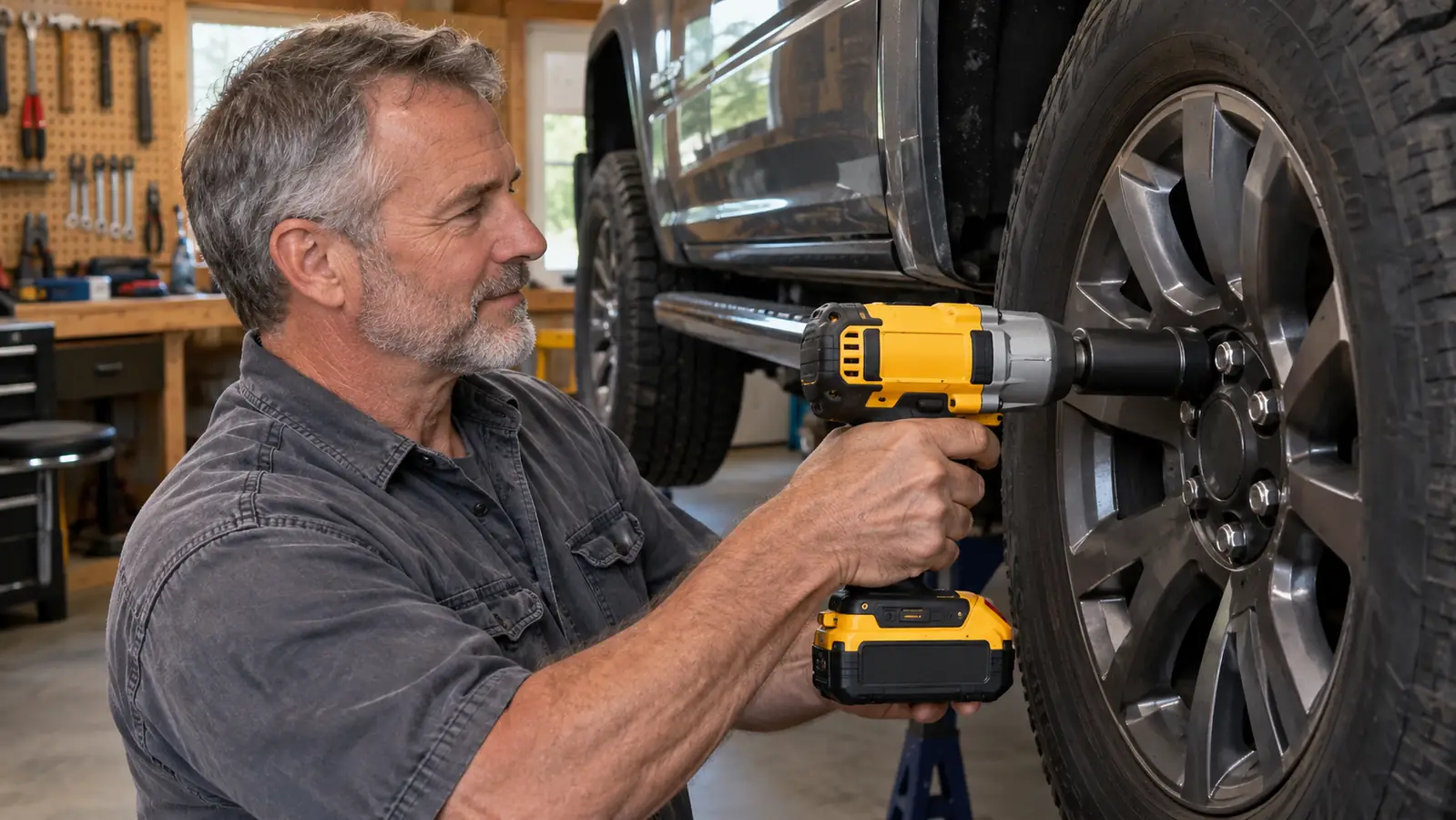
Here is what nobody tells you about the power of the DEWALT DCF900. The number on the box is impressive, but the number that matters is the one you feel in your hands on the third or fourth rattle of a bolt that has not moved in a decade. This tool has what I call the one-handed test. A weak impact wrench makes you lean into it and brace yourself. The DEWALT DCF900 sits in the fastener, you squeeze the trigger, and the bolt comes out like it was barely snug. It does not need your body weight. It does not need a second hand on the head. It just works.
The first time I used it, I put a socket on a lug nut, pulled the trigger, and the nut spun off so fast I was honestly startled. I had been using an older cordless impact that would stall on lug nuts that had been torqued by a shop air gun. This one does not stall. It has three speed settings, and I will be straight with you: I leave it on the highest setting for almost everything, because the lower settings are for people who are more careful than I am. If you are doing light work or working on aluminum parts, the lower settings are there for a reason. For truck work, you will live on high.
The one thing I will say about power is that it is not magic. A rusted bolt that is seized with corrosion will eventually win against any impact wrench, and anyone who tells you otherwise is selling you something. What the DEWALT does is shift the odds. It breaks free the bolts that a lesser tool would stall on, and for the ones it cannot break, you still need heat or penetrating oil or both. I keep a propane torch in the garage and I have needed it a few times this year. The DEWALT got me to the point where the torch is the exception, not the rule.
I used to schedule brake jobs around my willingness to fight rusty bolts. The DEWALT DCF900 turned that around in about a week.
The Hog Ring Anvil, and Why It Drives Me Up a Wall
Now we get to the honest part, the part the advertising does not lead with. The DCF900P1 comes with a hog ring anvil. That is the spring clip that holds the socket on the square drive. It works exactly the way hog ring anvils have worked for decades, and I hate it. When you are working in a tight spot and you need to swap sockets quickly, the hog ring makes you pull the socket off with a deliberate tug, and when you are in an awkward position with a socket full of grease, that tug is exactly the motion that ends with the socket flying out of your hand and bouncing off the concrete.
The fix is simple and it is cheap. You can buy a detent pin anvil for the DCF900 and swap it in about ten minutes with a snap ring plier. A detent pin uses a little spring-loaded ball bearing to hold the socket, so sockets slide on and off much easier. I swapped mine out in the first month and I have not looked back. If you buy the DCF900 and the hog ring bothers you, do not return the tool. Buy the anvil. It is a few dollars and it makes the tool feel completely different.
I am telling you this because it is the difference between an honest review and a spec sheet. Every review you read will tell you about the power, and they are right about the power. Almost none of them will tell you that you will probably want to change the anvil, and that the change is easy and cheap. That is the kind of detail you only learn by living with a tool, and it is the kind of detail that would have saved me an afternoon of cussing if someone had told me before I bought it.
Battery Life and the Cold
The DCF900P1 kit comes with one battery. I am going to be blunt about this: one battery is enough for a weekend, but it is not enough for a full day of work. A heavy brake job with the suspension bolts will drain the included battery noticeably, and if you are the kind of person who works until the job is done rather than until the battery dies, you will want a second battery. If you already own other DEWALT 20V tools, you already know this. The 20V MAX system shares batteries across everything, which is one of the reasons I have stayed with DEWALT for so long.
In the cold, the battery behaves the way every lithium battery behaves. It does not deliver its best performance when it is freezing, and the tool feels a little lazier on a January morning than it does in June. This is not a DEWALT problem. It is a physics problem, and every cordless tool you own will do the same thing. If you work in an unheated garage like mine, keep the spare battery inside the house and swap them when the tool starts to feel sluggish. That is the workaround, and it works.
One more thing about the battery: the charger that comes in the box is a standard DEWALT charger, which means it is reliable and it is not fast. A depleted battery takes a while to come back. If you are doing a big job, you charge one battery while you use the other, and you never stop working. That is the pattern I have settled into, and it is the pattern I recommend. The tool itself is not the bottleneck. The battery rotation is the bottleneck, and once you accept that, the tool becomes a pleasure.
Comfort, Weight, and How It Feels in the Hand
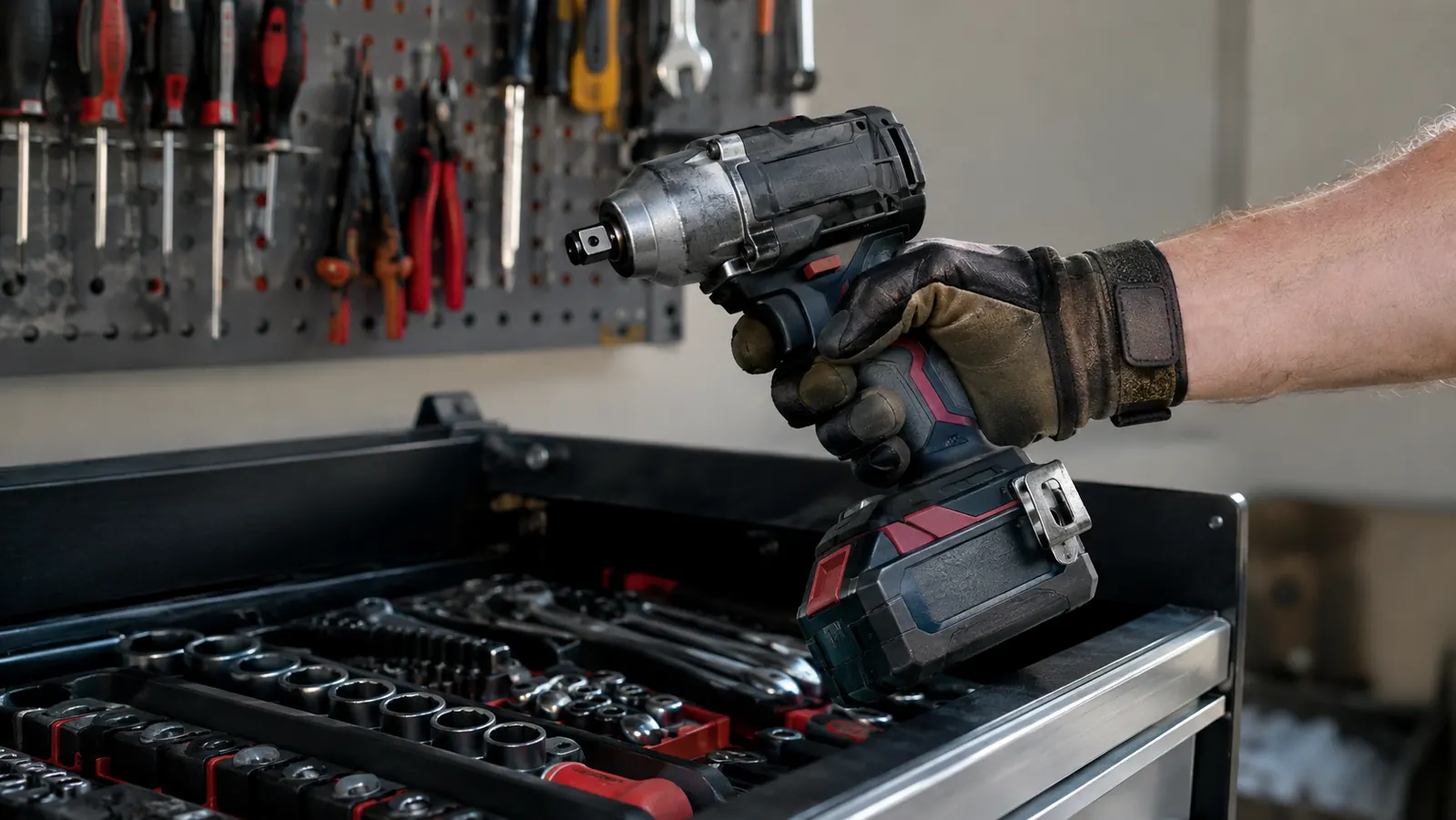
The DCF900 is not a small tool and it is not a light tool. It is a serious piece of equipment, and it feels like one. The weight is balanced well enough that I can run it one-handed on lug nuts without my wrist complaining, but I would not want to hold it over my head for very long. For the work most of you will do, brake jobs and suspension and the occasional seized bolt, the weight is a fair trade for the power. You are not going to use this tool for 8 hours straight. You are going to use it for the hard parts, and for the hard parts you want the weight.
The grip is comfortable and the trigger is responsive. DEWALT put a variable speed trigger on this tool, which sounds like a small thing until you need to break a bolt loose gently and then spin it off fast. The LED light on the base is genuinely useful when you are working under a truck at dusk, and it has saved me from holding a flashlight in my teeth more times than I can count. These are the small details that make a tool feel like it was designed by someone who actually works on things.
The one ergonomic complaint I have is the same hog ring anvil I mentioned earlier. With the detent pin anvil swapped in, the tool feels complete. Without it, every socket change is a small argument. I want to be clear that this is a preference, not a defect. Some mechanics prefer hog rings because they hold sockets more securely on impact. I have had a socket pop off with a detent pin on an air impact before, so I understand the argument. I just find the hog ring more annoying than the occasional popped socket, and I have made my choice.
What Nobody Tells You About the DEWALT DCF900
Here is the part of the review that most reviews skip. The DEWALT DCF900 is powerful enough that it will make you careless, and carelessness is how parts get broken. I have learned to start every bolt on a low setting and let the tool seat the socket before I give it the full trigger. The first time I used the tool, I snapped a cheap socket clean in half on a stubborn bolt because I let the full power hit a socket that was not up to the job. That is not the tool's fault. That is the tool telling you it is serious, and you need to be serious back.
You also need to know that the DCF900 will occasionally overtorque a fastener if you are not paying attention. An impact wrench is not a torque wrench, and this one makes that distinction very easy to forget. When I put wheels back on my truck, I run the lug nuts down with the DEWALT on a low setting and then finish them with a torque wrench. That is the correct way to use this tool, and it is the way I would tell anyone to use it. The tool gets you 95 percent of the way there. The torque wrench gets you the last 5 percent, and that 5 percent is what keeps your rotors true and your wheels attached.
And one more thing, the thing I think matters most for the home mechanic. This tool will make you want to find excuses to use it. I have re-torqued lug nuts I had no reason to re-torque. I have taken apart suspension parts that were fine, just because the tool made it easy. That is the real honest review of the DEWALT DCF900: it is so capable that it changes how you feel about working on your own stuff. The jobs you used to dread become the jobs you volunteer for, and that is worth something no spec sheet can measure.
What I Liked
- Genuinely strong, breaks loose rusty bolts that stall lesser tools
- Three speed settings give control for light and heavy work
- Battery system shared across the whole DEWALT 20V lineup
- LED light is well placed and genuinely useful under a truck
- Feels solid and well balanced despite the weight
- Hog ring anvil is easy and cheap to swap for a detent pin
Where It Falls Short
- Hog ring anvil makes socket changes awkward out of the box
- Kit includes only one battery, which is not enough for a full day
- Weight gets tiring for overhead or extended work
- Standard charger is slow, plan around battery rotation
- Power can snap cheap sockets and overtorque fasteners if you rush
Who This Is For
The DEWALT DCF900 is for the home mechanic who has fought one too many rusty bolts and decided that enough is enough. It is for the pickup truck owner who does his own brakes and suspension and is tired of the breaker bar dance. It is for the weekend fixer who wants a tool that does not quit halfway through a job on a Sunday evening when the parts stores are closed. If you already own DEWALT 20V tools, the battery argument basically makes the decision for you. One more bare tool and you are done.
It is also for the person who is moving up from a smaller impact wrench. I have owned and used smaller cordless impacts, the ones that fit in tight spaces and struggle with real work. The DCF900 is the next step up, the tool you buy when you are tired of stalling on lug nuts. It will not fit in every tight spot, and you will still keep a smaller tool around for the awkward ones. But for the jobs that matter, the ones that used to stop you, this is the tool that gets them done.
Who Should Skip It
You should skip the DEWALT DCF900 if you only work on small cars and light duty fasteners. This is a lot of tool for a brake job on a sedan, and the weight and the power will be more than you need. The lower speed settings help, but if your work never involves a rusted suspension bolt or a truck lug nut, you are paying for capability you will not use. A smaller and lighter impact wrench would serve you better and cost you less.
You should also skip it if you are the kind of person who wants one tool to do everything. The DCF900 is a 1/2 inch drive impact wrench, and it is not compact. It will not fit between the frame and the body on a lot of modern cars, and it is not the tool for interior work or anything delicate. This is a specialist tool for a specific job, and the specific job is breaking loose and driving large fasteners. If that is not your work, this is not your tool.
If you are tired of fighting rusty bolts, this is the tool that ends the fight
A year in my garage says the DEWALT DCF900P1 is worth every bit of the good reputation it has. Check today's price on Amazon and see if it belongs in your toolbox.
Amazon Check Today's Price on Amazon →