
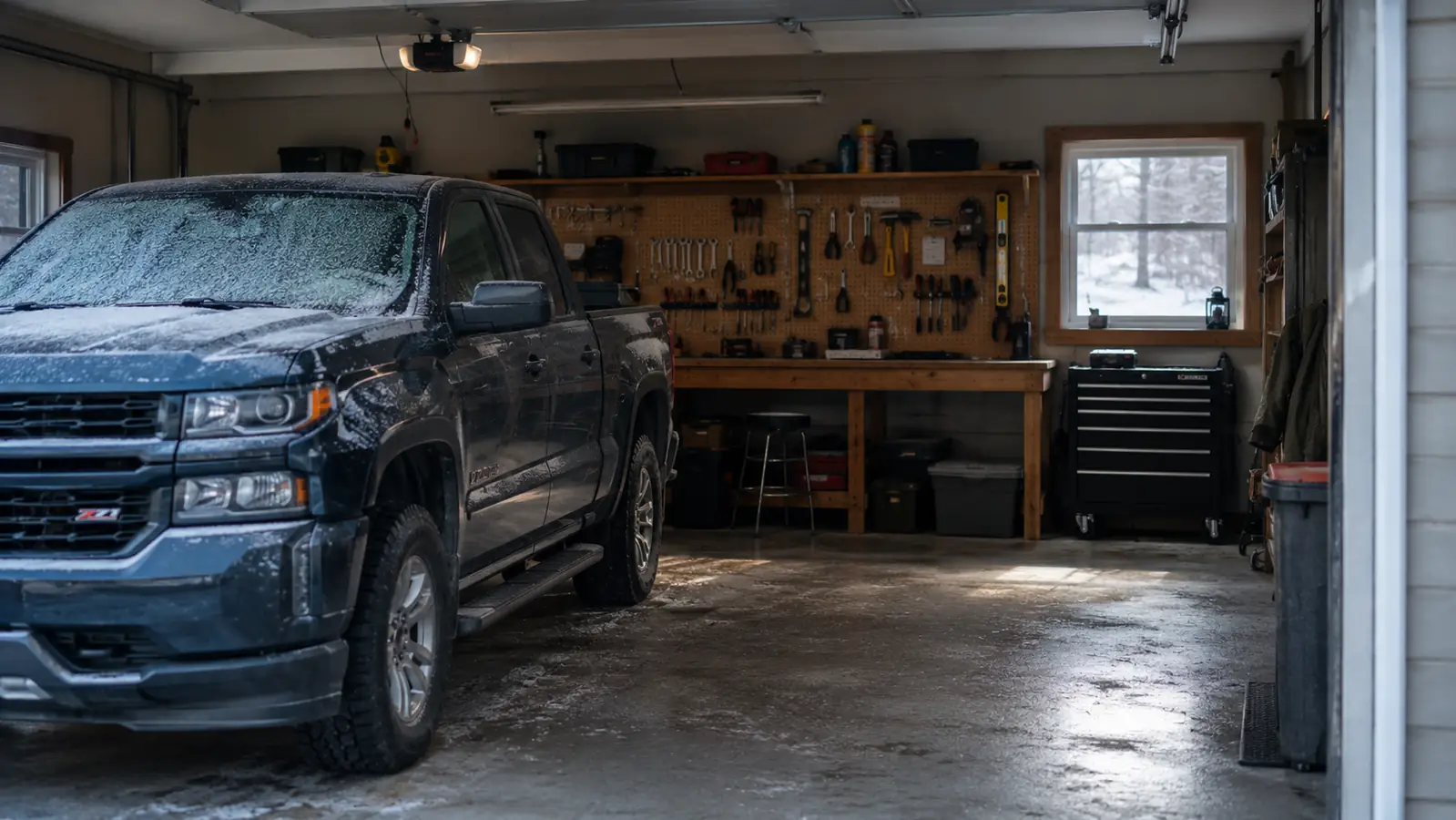
A pickup that sits in an unheated garage all winter is a pickup that will not start in February. I have been turning wrenches for thirty years, and I have lost count of the dead batteries I have jumped in driveways after a cold snap. The cause is almost never a bad battery. It is a battery that sat for two weeks at ten degrees and slowly drained itself flat. The fix is not a jump box. The fix is a maintainer that does the job while you are inside drinking coffee.
My own truck is a 2014 Ford F-150, and it spends the worst months parked in a detached garage that has no heat beyond a portable heater I run when I am out there working. I have used a Battery Tender Plus on it for several winters now, and the routine I lay out below is the one I actually follow. It takes about ten minutes the first time and two minutes a week after that.
The maintainer that keeps a cold truck ready to start
A Battery Tender Plus is the tool I trust on my own F-150. It charges, then floats, then watches the battery all winter so you do not have to.
Amazon Check Today's Price on Amazon →Step 1: Clean the terminals before you hook anything up
Corrosion is the quiet killer. A layer of white or blue crust on the terminals acts like insulation, so the maintainer reads the battery as healthy when it is actually starving for current. I check both terminals first, and if I see buildup, I clean it before I connect anything. The first winter I used a maintainer, I skipped this step, hooked everything up, and the light went green in an hour. The truck still cranked slow in January. When I finally pulled the cables, the positive post had a crusty ring under the clamp that I had not seen from above. That one lesson cost me a morning with a jump box, and I have not skipped the cleaning since.
I use a wire brush with a terminal cleaning attachment, the kind with bristles on one end and a cone on the other. Disconnect the negative cable first, then the positive, brush the posts and the inside of the cable clamps until they are bright, and reconnect in reverse order. A light coat of dielectric grease on the posts keeps the corrosion from coming back as fast. On my F-150 the positive terminal sits close to the fuse box, so I wrap the post with a shop rag while I brush to keep the grit off the wiring.
If the terminals are already clean, skip the brush and just make sure the clamps are tight. A loose connection will make the maintainer cycle on and off all night, and it will not keep the battery topped up the way it should. I give the clamps a firm twist by hand, then a quarter turn with a 10mm wrench. If the cable moves at all when I tug it, I pull it off and start over. A connection that feels solid in October will not loosen itself by February.

Step 2: Hook up the maintainer the right way
The Battery Tender Plus comes with two ways to connect: alligator clamps for direct hookup, and ring terminals you can bolt permanently to the battery posts. For a truck that sits all winter, I prefer the ring terminals. You bolt them on once, route the little harness out under the hood, and from then on you just plug the maintainer into the harness. No opening the hood in January. I ran mine along the edge of the fender and tucked the plug end under the hood latch so it stays dry and out of the way.
If you use the clamps instead, connect the red clamp to the positive terminal first, then the black clamp to a clean, unpainted metal ground on the engine block or frame. Do not clamp the black lead to the negative battery post on a modern truck. The battery sensor on many late-model pickups sits on the negative cable, and clamping past it confuses the charging system. I have seen that mistake leave a perfectly good battery dead because the truck never charged it properly on the road.
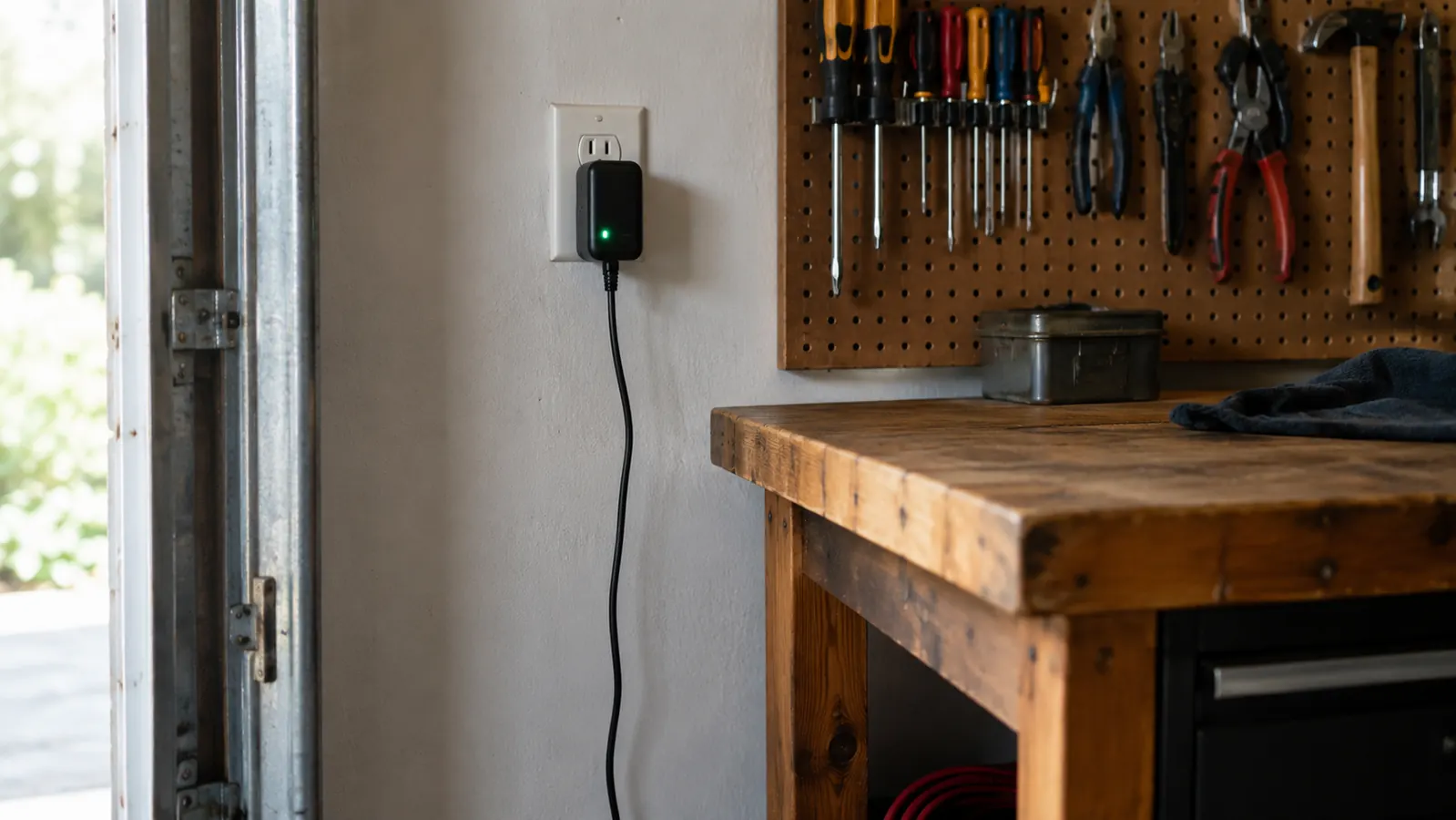
Plug the maintainer into a grounded outlet and check the lights. The Battery Tender Plus shows red while it is charging and green when the battery is full. The first hookup after a long sit can take a few hours to go green. That is normal. Leave it alone and let it work. On my truck the first hookup of the season took about four hours to go green, because the battery had been sitting for three weeks while I was finishing a project inside. The next morning it was still green, and it stayed that way all winter.
Step 3: Let it float, do not let it cook
This is the part that separates a maintainer from a plain trickle charger. A trickle charger pushes a fixed current all night, and on a battery that is already full, that overcharging boils off electrolyte and warps the plates. A maintainer like the Battery Tender Plus senses the voltage, charges until full, then drops to a float voltage that holds the battery at 100 percent without cooking it. I have seen the aftermath of a season on a cheap trickle charger: a battery case bulged at the sides and the cells dry as a bone. A maintainer never does that.
The Battery Tender Plus puts out 1.25 amps, which is plenty for a truck battery that is just sitting. It is not a charger for a dead-flat battery. If your battery is so low the dome light barely glows, you want a real charger first, then the maintainer to keep it there. For a battery that is merely cold and slowly self-discharging, 1.25 amps is exactly the right size. A bigger charger would not do the job better here. It would just hammer the battery with more current than it needs.
Once the light goes green, the maintainer stays connected all winter. That is the whole point. You do not unplug it when the battery is full. You leave it on the float and it keeps the battery at the top of its charge for months. The Battery Tender Plus will cycle on and off on its own, topping up the small amount the battery loses to self-discharge and to the truck's own parasitic draws like the clock and the keyless entry module. On my F-150 that draw is small, but over a month it is enough to drop a healthy battery to the point where a cold morning will not crank it.
Step 4: Check the battery and the maintainer once a week
A two-minute weekly check catches problems before they leave you stranded. I look at the maintainer light first. Green means the battery is full and the system is happy. Red or blinking means something is wrong, and I investigate before it gets worse. I do this check on Saturday mornings while the coffee is brewing, and it has become part of the routine like checking the oil.
Then I check the electrolyte level if the battery has removable caps. On a maintenance-free battery, I skip that and just look at the case for swelling or cracks. A swollen case means the battery froze or was overcharged, and no maintainer will fix that. If the case looks wrong, the battery gets replaced. I also give the cables a tug to make sure nothing worked loose, and I glance at the garage floor under the truck for any sign of battery acid. That weekly look takes longer to describe than to do, and it has caught a loose ring terminal and a failing battery in my own garage on two separate winters.
One winter the light on my maintainer was blinking red on a Tuesday, which I had never seen before. I checked the connections, found the ring terminal on the positive post had worked a half turn loose, tightened it, and the light went back to green within the hour. If I had not looked until the truck failed to start, I would have been jumping it in the driveway in the dark. The weekly check is the cheapest insurance in this whole routine.
Step 5: Give the truck a short drive every couple of weeks
A maintainer keeps the battery full, but it does not keep the rest of the truck healthy. Seals dry out, tires develop flat spots, and moisture settles in places it should not. Every couple of weeks, I take the F-150 out for a twenty minute drive, even if it is just a loop to the gas station and back. I try to do it on a day when the roads are dry, because salt spray on the undercarriage is its own problem and I would rather not add it to the list.
Before I drive, I unplug the maintainer and tuck the harness out of the way. After I park, I plug it back in. The Battery Tender Plus goes right back to work, and by the next morning the light is green again. That drive also keeps the battery from sitting at a full float for months on end, which is easier on it than never moving at all. It lets the alternator do its job and gives the starter a real workout, which is the best test of whether the battery is actually healthy.
One note: if the truck has been sitting for a month or more, check the tire pressure before you drive. Cold air drops pressure, and a tire that looks fine can be ten pounds low. That is not a battery problem, but it is part of the same winter routine. I keep a cheap gauge in the glove box and check all four tires before the first drive of the season. It takes two minutes and it has saved me from a slow leak more than once.
What Else Helps
A Battery Tender Plus is the backbone of the routine, but a few other things make the winter easier. A battery warmer blanket helps in extreme cold, though it needs an outlet near the battery. A quality battery with a good cold cranking amp rating matters more than any maintainer if the battery is already weak. And a simple outlet timer is not needed here, because the maintainer manages its own charge cycle. What I would skip is the cheap trickle charger from the big box store. It will overcharge your battery and ruin it in a season. I have replaced two batteries for neighbors who trusted one of those, and both times the charger was the culprit, not the battery.
The Battery Tender Plus has kept my F-150 starting all winter for years. The green light is the most reassuring thing in my garage.
Set your truck up for winter in ten minutes
Clean the terminals, hook up a Battery Tender Plus, and let it float all season. That is the whole routine, and it works.
Amazon Check Today's Price on Amazon →